Casimir effect

Hey everyone! Today, I am going to show you a super cool application of what I introduced to everyone earlier – annihilation reaction. The Casimir effect is a small attractive force that acts between two close parallel uncharged conducting plates, due to quantum vacuum fluctuations of the electromagnetic field, blah, blah, blahhhh.. OK, wake up, don’t fall asleep just yet! Forget the textbook definition, let’s dive straight into a simple and complete breakdown of the Casimir effect that I have prepared just for you folks!

Heisenberg’s Uncertainty Principle states that you cannot measure the position and the momentum of a particle at the same time. You can only measure one at a time.

In Casimir effect, we talk in terms of time and energy of a particle at the same time. For example take a photon: you can measure the time at which it comes to a position, but the cost of that measurement is the you cannot measure the energy of the photon at that position and vice versa.

This uncertainty principle also suggest that a photon with zero energy, which practically means it doesn’t exist, can suddenly acquire energy, making its energy state uncertain.
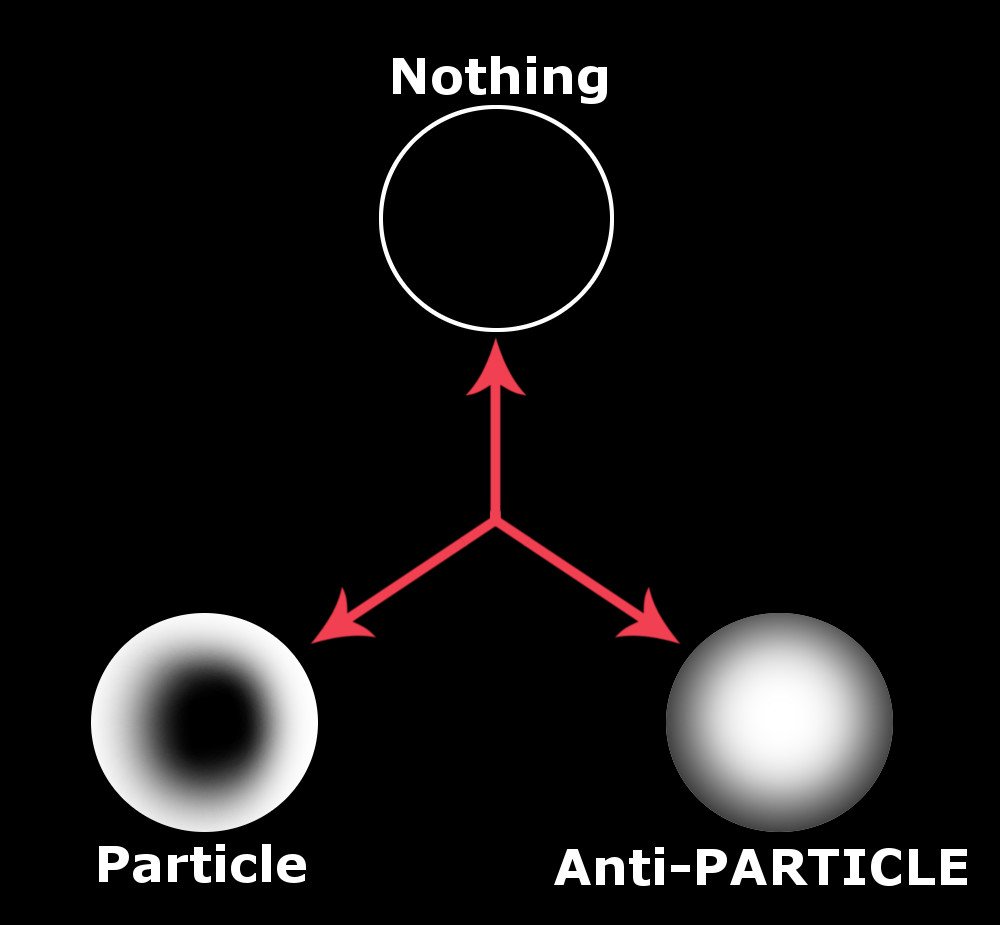
Now we all probably learnt in our physics classes  that vacuums are empty space, and there are no particles in a vacuum. However, this is technically wrong. There are virtual particles popping in, and out of existence, through annihilation reaction in a short span of time, but we just can’t detect them directly. 

How is this possible? I will make this easier to understand using an analogy. Imagine that you are in a carnival, and you want to ride the carousel. However, you left your wallet at home. In order to buy a ticket for one round, you need 5 dollars. You approach the ticket counter, taking your chances, and explain your dire need of 5 dollars to the staff woman there, to go on the ride. The woman, feeling bad, loans you the five dollars, and she makes you promise that you will repay her within the next 30 minutes. You take the money, buy a ticket and go for one round. You repay her within the next thirty minutes, and the debt is repaid, making the staff woman’s money deficit balanced.

But the carousel ride was so fun that you want to go five more times in a go! You go back to the woman and ask her to give you 25 dollars. She frowns at you, and tells you that she will give you the money, as long as you repay her within 10 minutes this time! 

Now let’s make the connections. You are the particle, the system is the staff woman, and the money is the energy required. A particle can pop into existence by borrowing energy from a system, as long as it puts the energy back before anyone notices, which is basically through annihilation. The more energy you borrow, the less time you have to put it back. This is a type of time-energy tradeoff that occurs in a vacuum.

There are still some rules that must be followed, though. These particles can only be produced in pairs, more specifically, in the form of particle-antiparticle pairs. So, in a vacuum there is a vast mass of pairs of particles-antiparticles popping into existence and disappearing, and so they are all considered virtual particles (more about the exact definition later).  Also, any particle-antiparticle pair can be produced such as photon-photon, electron-positron etc. But the least energy are required by photon-photon pairs, because photons are the least massive particles. If we look at the Einstein’s famous equation e=mc^2, where m stands for mass and e stands for energy, we can justify that the more massive your particle is, more energy is required. 
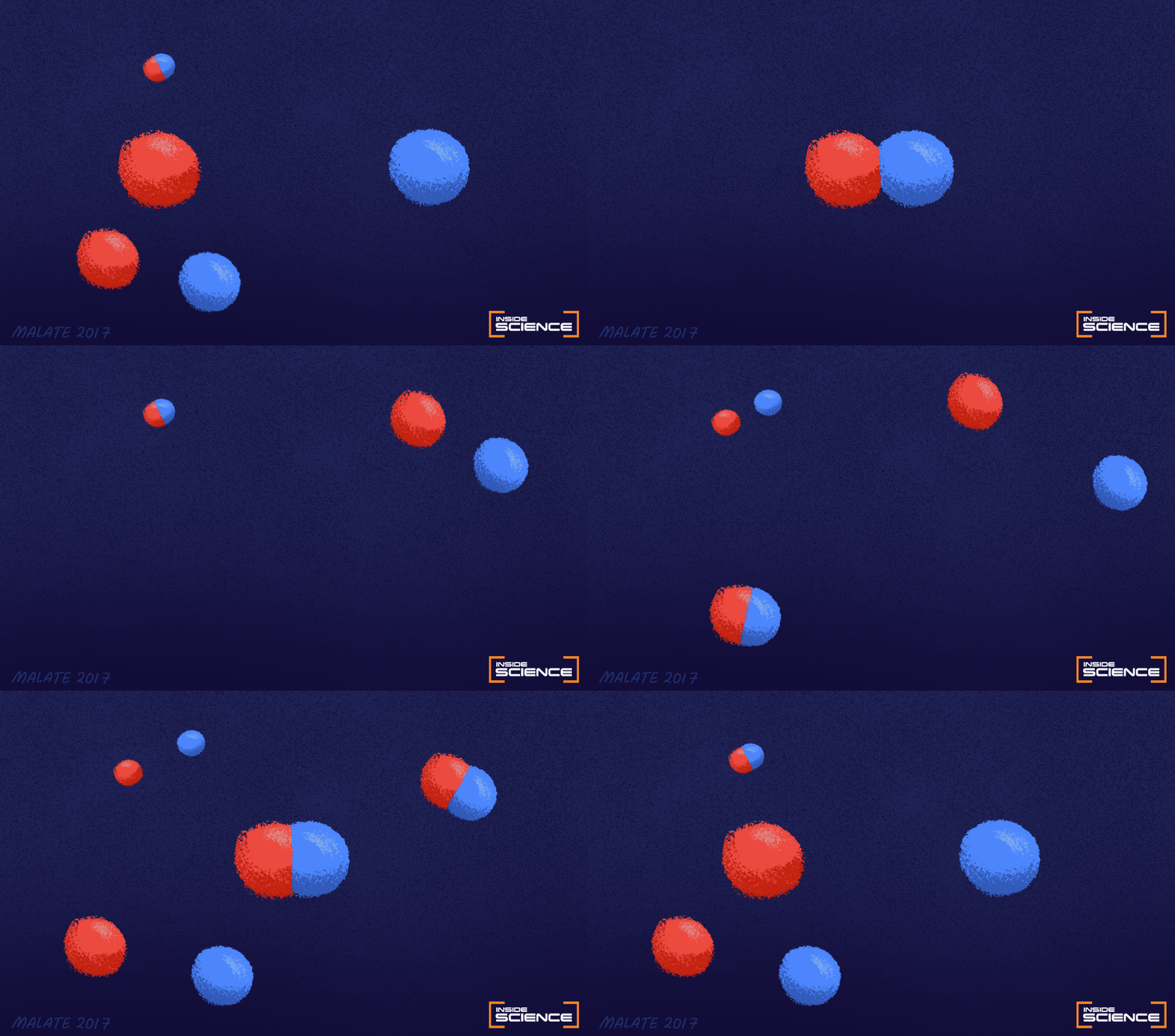
The Nature of Nothingness: Understanding the Vacuum Catastrophe
Particles and Antiparticle pairs being produced in a vacuum due to Heisenberg’s Uncertainty Principle, and annihilating shortly after.

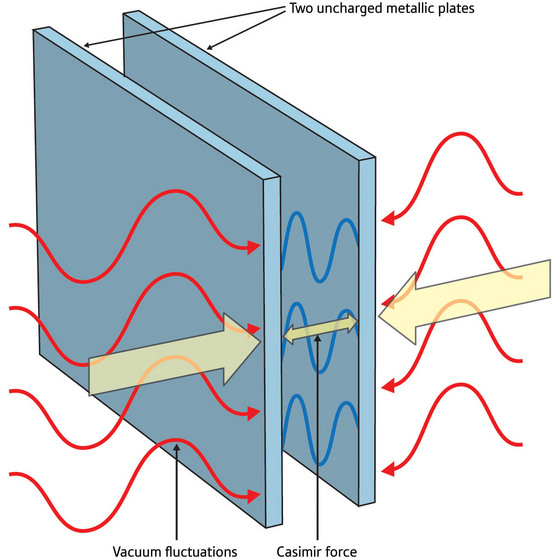
Now that you know the basics, let’s come to the Casimir effect. In this experiment,  scientist Hendrik Casimir in 1948, predicted that two metal plates can attract each other in a vacuum, if they are placed a micrometer apart – 0.000001 m apart – they would shift and attract each other. Sounds bizarre right? Remember that these plates are not connected to any external power sources, to create magnetic fields and attract from there or anything. 
Nanotechnology Now - Press Release: Warming up to the Casimir ...
Visual Representation of the Casimir Effect – Note the difference in wavelengths of the fluctuations in the gap and outside

Ok, before I make your head hurt, let’s break this seemingly complex phenomena down a bit, shall we? When you place the plates so close together, you create restrictions in the space between the plates, and so you create restrictions in the types of (low-energy) photons you can produce, whilst the photon pairs on the other sides of both the plates, have virtually no restrictions. So the photon pairs produced within the gap have small wavelengths, because that’s all the size they can squeeze in, and so you create fewer particles compared to the other sides of the two plates. So the more photons created in the vacuum on the exposed sides of the plates exert a pressure on the plates as the bounce around, and so do the photons in the gap. But since there are more photons on the outside, they exert more force compared to the photons in the gap, overpowering them, and pushing the plates closer together! There are lots of other factors at play here like energy density of space time etc, but all that for another day 😉

Theoretically, you could actually produce any pairs of objects you wanted to like houses or cats or planets. But the problem is, their masses would be so huge that by the time they pop into existence, they annihilate and dissapear so quickly, that you don’t even see them (recall the time-energy tradeoff I introduced you to earlier)! So, we don’t bother to look at the macroscopic version of this phenomena created by Heisenberg’s Uncertainty Principle.

So there you have it – Casimir effect in a nutshell. Hope I didn’t confuse anyone too much! If you survived reading through this explanation, congratulations and kudos to you, for you have learnt the mechanics of one of the many perplexing events fresh from the world of physics, that you probably never heard of before!

Give me a like and comment if you liked this post! Oh, and subscribe to my blog, if you would like to get notified every time I post a new explanation!

Have a great day ahead and keep loving learning!

Electron-Positron Annihilation

Series 1 Blog Post 2: Electron-Positron Annihilation

As stated before, low energy electron-positron gives rise to two low energy gamma ray photons that move in opposite directions. Gamma rays exist as photons, and so gamma ray is just a photon with a high energy level, but we consider it as low energy level in annihilation reactions, as there are higher energy levels out there!

Now, why exactly can only low-energy photons be produced under these conditions?

In my previous blog post, I introduced you to the concepts of conservation of momentum and energy during annihilation reactions. Since this electron-positron has low energy, it can only give rise to another such subatomic particle which has low energy levels as well as the same momentum as itself.

Now let’s use some numbers to better understand what I mean by these conservations. The rest mass (which is nothing but the mass of a body measured when it as rest) of both positron and electron, is 0.511 MeV (M stands for million and eV is a symbol for electron volt). Electron volt is a unit to measure energy, and it is the amount of energy an electron gains after being accelerated by one volt of electricity. If we sum that up, because we have two particles with 0.511 MeV (0.511 + 0.511), we get the total rest mass as 1.022 MeV. Now, keeping that value in mind, note that one photon has an energy of 0.511 MeV as well. Having two photons, if we do the same calculation, both photons will have a total energy of 1.022 MeV. And le voilà ! They are both equal and hence the law is proved true for energy.

I will continue this tomorrow everyone! Thanks for reading my work!

Annihilation Reactions

Series 1

Blog Post 1: An Introduction.

The first set of discoveries of an atom, the building blocks of all matter, was made by physicists J.J. Thompson, Ernest Rutherford, Neils Bohr as well as James Chadwick. These brilliant minds are well known for their discoveries and theories of the surface level sub-atomic particles – protons, neutrons and electrons.

However, as time passed, we have learnt that there is more than what meets the eye. Protons and neutrons are made of quarks, which come in different ‘flavours’ (yes, that is what they call them) and other subatomic particles such as neutrino, photons, muons, gluons, pions, mesons, leptons, hadrons, bosons and the list goes on. These subatomic particles have more versions of themselves as well! Gosh, my head is already spinning! We will get into each one of these crazy particles later!

Each of these particles have their own anti-particle as well, which is nothing but a particle with same mass but opposite electrical/magnetic charge. For example, an electron’s antiparticle is a positron, or a neutrino’s antiparticle is an anti-neutrino. Each of these particles and antiparticles all have the same mass, but an equal yet opposite charge.

This is where the whole aspect of an annihilation reaction comes into play. Annihilation as a word means complete destruction. So, an annihilation reaction is basically when a subatomic particle collides with it’s anti-particle to produce two respective particles, and the product depends on the initial particle set, the energy of collision and many other factors. Remember that the momentum and energy with which the initial particle and anti-particle collide is conserved, so the products have the same values of energy and momentum. This law must be obeyed!

Let us take an electron and it’s anti-particle, a positron. When these two particles undergo an annihilation reaction at low-energy levels, two photons are produced. However when positron and electron collide at high energy levels, they produce charm quarks (this is one of the four ‘flavours’ of quarks), which give rise to mesons (a particle made of a quark and it’s antiquark). Now you may ask me why mesons don’t annihilate. Well, that is slightly complicated, so I will explain that later on in this particular series.

So, that’s is a mere surface skim of the basics of annihilation reactions and the various subatomic particles, that I bet you never even knew existed until know! Feel free to drop by an email and ask me any questions! Keep being curious, and stay tuned to my follow-ups as we get deeper and deeper into the world of particle physics!

Have a great day ahead!

About Me

This is a short introduction to me and my aims

Hey there, my name is Sneha. I am a student from India and I am currently studying in high school. I have always been a science girl from young ages, even before I knew what science is. I love asking questions, and I particularly enjoy questioning the fundamental workings of the universe, as well as why things are the way they are

This blog is to convey my love for one subject in particular: PHYSICS

  • The content of this blog explains many phenomena in the world of physics, but I will focus closely upon quantum mechanics and astrophysics
  • My viewers can gain some insight on complex topics, as I will make them simpler and hopefully bring out the wonder of physics through my writing

I hope to inspire as many people as possible and hope to make them view the world in a different way

Some more info, before you dive in:

  • I will be exploring the bizarre world of quantum physics, one of the most interesting yet most confusing branch of the subject, and a frontier for new pioneers. I will also be going into the realm of astrophysics occasionally.
  • Honestly, everyone is welcome to this blog! And don’t get scared, cause I will make my ideas as simple as possible, in terms of language at least 😉

UPDATE: As of 2022, my interests have of course changed, and I will clarify that this blog is a general science blog, focusing primarily on topics of chemistry and physics. I have graduated high school as of now, and look forward to continue writing articles on science and technology in the coming future.

Design a site like this with WordPress.com
Get started